Interview with an activist – Agness Chindimba
10 August 2020
By Hannah Little
By Hannah Little
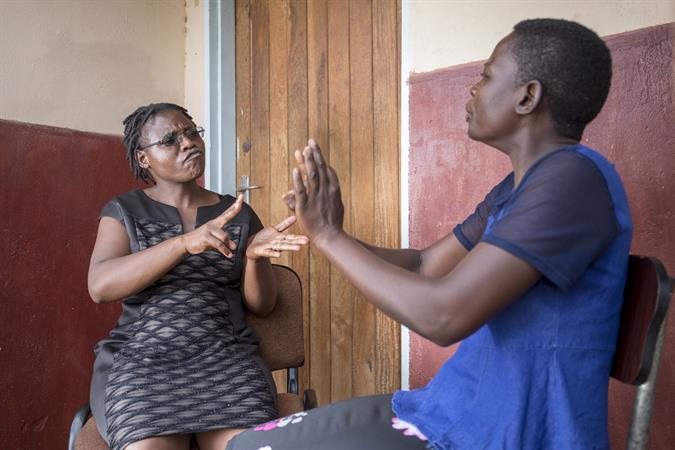
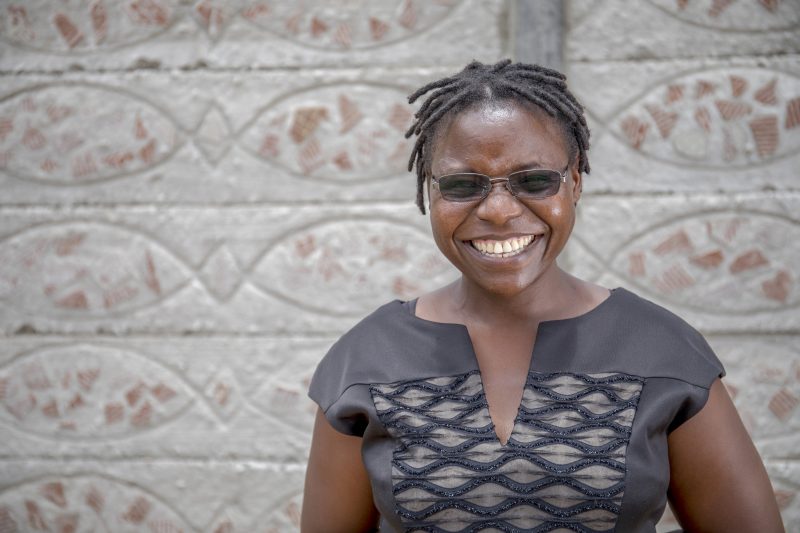
Agness Chindimba (pictured above) is the founder and Executive Director of Deaf Woman Included (DWI), a grassroots organisation that works with deaf women from across all provinces in Zimbabwe. A determined disability rights activist, Agness travels the length and breadth of Zimbabwe increasing the knowledge and information available to women with disabilities.
Hi Agness! Can you explain to us what life was like growing up as a deaf woman in Zimbabwe?
“When I was an undergraduate student at the University of Zimbabwe I was the only deaf student at the whole university. It was there I experienced discrimination simply because I was deaf. My lecturer doubted my capability and made his bias clear in front of the whole class.”
How did that experience make you feel?
“At first I felt very angry because of the stigma attached to disability but then I realised some people simply need to be taught to respect women with disabilities. That is when I learnt to advocate for myself and all those whose voices are not listened to.”
Hi Agness! Can you explain to us what life was like growing up as a deaf woman in Zimbabwe?
“When I was an undergraduate student at the University of Zimbabwe I was the only deaf student at the whole university. It was there I experienced discrimination simply because I was deaf. My lecturer doubted my capability and made his bias clear in front of the whole class.”
How did that experience make you feel?
“At first I felt very angry because of the stigma attached to disability but then I realised some people simply need to be taught to respect women with disabilities. That is when I learnt to advocate for myself and all those whose voices are not listened to.”
Can you give us some examples of your activism work? “I have advocated for the inclusion of sign language asone of the official languages of Zimbabwe. It is now stated in the national Constitution. I continue to support women with disabilities to participate fully in their communities. Through initiatives such as advocating for disability friendly polling stations and developing greater understanding of their right to vote, women with disabilities are able to make choices about their community’s social, political and economic spheres.”
Can you describe some of the challenges for women with disabilities in Zimbabwe?
“More often than not they do not experience the same rights as others because our society still believes women with disabilities have no need to make choices. Because of this, women with disabilities suffer a lot of discrimination and even experience more gender-based violence, particularly because most of them depend on their abusers for a living.”
How do you feel about the future for women with disabilities in Zimbabwe?
“Over the past 25 years I feel we have achieved positive change but I feel we still fall short of what we could achieve. We have very good laws that are not being implemented and I feel this is not right. I hope Beijing+25 will bring real political and economic change and alleviate the problems being faced by women.”
COVID-19 Response: As Zimbabwe responds to the global pandemic, Deaf Women Included have reported that much of the public service announcements on staying safe during COVID-19 have been in inaccessible formats therefore excluding people with disabilities from potentially lifesaving information. As Zimbabwe remains in lockdown, Agness has been producing online videos which communicate key information in sign language on ways of staying safe and pathways to reporting rising cases of domestic violence. Photos – Top: Agness (left) communicating in sign language with Simbisu (right), who is supported by Deaf Women Included in Gweru, Zimbabwe. Inset: Agness Chindimba Support our work: We continue to distribute urgent resilience funding to our 42 partners in Africa and Asia in response to the COVID-19 pandemic. Further details are available here or to support our relief efforts, please donate here.
“More often than not they do not experience the same rights as others because our society still believes women with disabilities have no need to make choices. Because of this, women with disabilities suffer a lot of discrimination and even experience more gender-based violence, particularly because most of them depend on their abusers for a living.”
How do you feel about the future for women with disabilities in Zimbabwe?
“Over the past 25 years I feel we have achieved positive change but I feel we still fall short of what we could achieve. We have very good laws that are not being implemented and I feel this is not right. I hope Beijing+25 will bring real political and economic change and alleviate the problems being faced by women.”
COVID-19 Response: As Zimbabwe responds to the global pandemic, Deaf Women Included have reported that much of the public service announcements on staying safe during COVID-19 have been in inaccessible formats therefore excluding people with disabilities from potentially lifesaving information. As Zimbabwe remains in lockdown, Agness has been producing online videos which communicate key information in sign language on ways of staying safe and pathways to reporting rising cases of domestic violence. Photos – Top: Agness (left) communicating in sign language with Simbisu (right), who is supported by Deaf Women Included in Gweru, Zimbabwe. Inset: Agness Chindimba Support our work: We continue to distribute urgent resilience funding to our 42 partners in Africa and Asia in response to the COVID-19 pandemic. Further details are available here or to support our relief efforts, please donate here.